─── Sonoran Foothills · Scottsdale, AZ
Recovery Is Where the
Next Win Begins.
A referral-based rehabilitation and conditioning center for English and Western performance horses. Seven modalities on one site, protocols set in coordination with the referring veterinarian, and documented outcomes returned on every case.
─── Sonoran Foothills · Scottsdale, AZ
Fitness Without the Wear.
The AquaTred uses the buoyancy and resistance of water to load the musculoskeletal system while unloading the limb. Horses build strength, stamina, and topline under conditions that reduce concussive force on joints, tendons, and healing tissue.
As water depth increases, a greater share of the horse's weight is supported — permitting controlled, purposeful movement earlier than hard ground allows. Depth, speed, resistance, and session length are adjusted case by case, whether the horse is returning from surgery or building toward competition.
One tool, two applications: returning injured horses to soundness, and bringing sound horses to peak fitness.
The higher the water, the more of the horse's weight it carries — and the less the limb has to. Depth, speed, and session length are set for each horse in coordination with the referring veterinarian. Illustrative only; not a treatment protocol.
A full complement. One site.
The AquaTred anchors the program. Six additional modalities allow us to progress a horse through each stage of rehabilitation — from unloaded movement, to controlled loaded work, to targeted tissue management between sessions — all without hauling to a second provider.
Dry Treadmill
Controlled flatwork at full load and a set speed. The measured step between water-based exercise and ridden work, while also building cardiovascular fitness with the gait maintained at a consistent pace
Eurociser
Consistent daily movement at controlled speed and direction. Used for warm-up and cool-down around rehabilitation sessions, and to maintain turnout-level activity for horses on restricted exercise programs.
Cold Saltwater Therapy
Chilled, salinated water applied to the distal limbs following exercise. Used for post-session management of the lower leg according to the needs and schedule of each case.
TheraPlate
Vibration therapy that provides stimulus without the concussive load of conventional exercise. Useful for horses with restricted exercise programs and as a preparation step before a rehabilitation session.
PEMF
Pulsed electromagnetic field therapy incorporated into the horse's program around rehabilitation sessions, when recommended by the referring veterinarian.
Shockwave
Extracorporeal shockwave therapy administered under veterinary direction and according to the treating veterinarian's protocol. Treatments are documented and included in the horse's overall case record.
A program built around the individual horse
Modality selection is determined on a case-by-case basis in coordination with the referring veterinarian. Therapeutic modalities are provided under veterinary direction. The Center does not diagnose conditions or prescribe treatment.
The Center supports horses across the full spectrum of recovery and performance. Every program is built in coordination with the Center's advising veterinarian and matched to the individual case.
Post-Surgical Recovery
Structured, low-impact reconditioning for horses returning from:
Tendon and ligament injuries
Joint chip (arthroscopic) removal
Fracture recovery, once cleared for controlled exercise
Colic surgery — rebuilding core strength, topline, and fitness after time off
Ongoing Management
Supportive, low-concussion movement for horses managing:
Arthritis — maintaining range of motion and muscular support without concussive loading
Kissing spine — encouraging correct posture, core engagement, and topline development as part of a managed program
Competitive Conditioning
For sound sporthorses being built for the demands of the competition ring: cardiovascular fitness, muscle, stamina, and topline, developed while limiting load on the legs that have to carry them there.
Conditioning horses live on-site, and their own professional trainer retains access to the property to keep them in work — the existing program stays intact.
What a single-site program changes.
Frequency, Held
Rehabilitation protocols are written in sessions per week, and hauling schedules are where that frequency is usually lost. Horses in the program live on-site, so the program runs at the interval the protocol specifies rather than the interval a trailer allows.
One Site, One Invoice
Water work, dry work, and therapeutic modalities sit on the same property under one program. No separate providers to coordinate, no per-visit hauling cost, no gaps between them.
No Owner Logistics
Nothing in the weekly program requires the owner to move the horse or attend a session. The Center runs the schedule and reports against it.
Documented, Not Described
Every case is measured on a fixed schedule and reported to the referring professional. Progress is defended with a record rather than an opinion.
Dedicated Staff
Sessions are run by staff whose assignment is the recovery program itself — trained in equine conditioning and recovery, not covering it between other duties. That is the difference between owning a treadmill and running a rehabilitation program.
Biosecurity
All equipment and facilities are cleaned after each use. Negative Coggins pulled within 12 months and current (given within 6 months) equine influenza and EHV vaccinations are required prior to equine entry to the facility.
By referral — two paths in.
Veterinary referral — for rehabilitation and recovery
The Center works alongside veterinarians, clinics, and hospitals across the region. Every recovery case begins with a referral: the diagnosis, the imaging, and the treating veterinarian's recommendations come with the horse and govern the program that follows. Our team builds and runs the in-water and modality work against those recommendations, matched to the injury, the stage of recovery, and the stated goal, with progress reported back throughout.
Trainer referral — for fitness and conditioning
Sound horses come through their professional trainer to build and maintain competitive fitness. The path suits Western and dressage programs in particular: because conditioning horses live on-site, the referring trainer retains access to the property to ride and work the horse, so the program and the discipline expertise stay where they are.
Site and location
The facility sits on thirty acres at 2,000 feet, above the Phoenix valley floor, where summer temperatures and air quality are measurably better than the desert below — a material factor for horses in daily work through the Arizona season.
It is nine miles from WestWorld of Scottsdale, host to major Western, English, and Arabian shows year-round. For a horse conditioning between circuits, or one working back toward the ring, that is a short haul rather than a long one.
The Objective Outcome Measurement System.
Impressions are not data. Every horse in the program is tracked through the Objective Outcome Measurement System — a consistent, protocol-driven record of measurable change from intake to discharge.
Baseline, interim, and discharge measurements. Standardized photographs taken from fixed positions each time. A complete log of every AquaTred and modality session, with fitness and recovery data recorded alongside. All of it compiled into a report returned to the veterinarian or trainer who referred the horse, so the professional directing the case is working from figures rather than impressions.
The Center measures. Interpretation stays with the veterinarian.
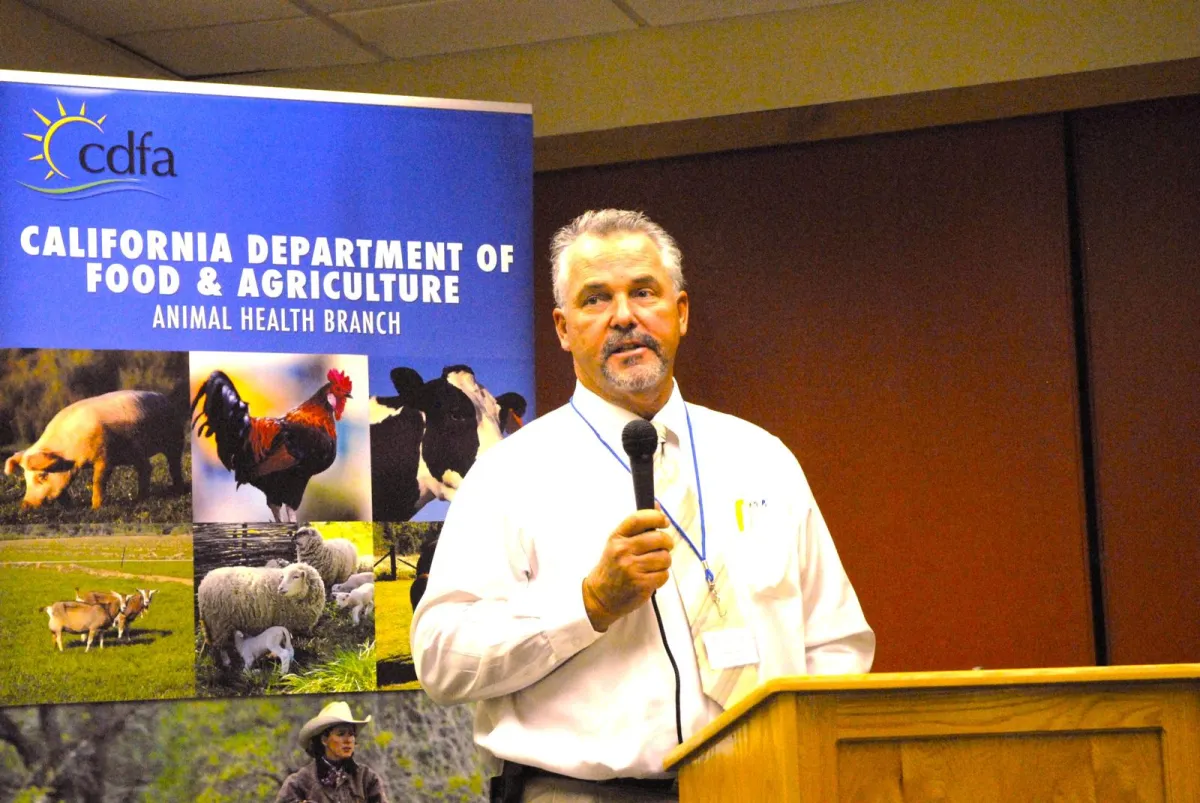
In advisement with Dr. Kent Fowler.
Dr. Kent Fowler serves as veterinary advisor to the Center. He helps establish the clinical standards and protocols that guide our programs and advises on how the Center's rehabilitation systems are developed and operated — including their appropriate limits.
Day to day, the work is ours. Our team designs and conducts each horse's conditioning program within the diagnosis and recommendations provided by the referring veterinarian. We monitor the horse throughout the program, document progress, and communicate updates to the referring professional.
Dr. Fowler's experience and guidance provide an additional level of veterinary oversight and help ensure that our practices remain consistent with the standards established for the Center.
About Dr. Fowler
A graduate of the University of California, Davis, Dr. Fowler earned his bachelor's degree in animal science and his Doctor of Veterinary Medicine in 1977. He spent 27 years in large-animal practice on California's Central Coast, specializing in equine medicine.
In 2004, he joined the California Department of Food and Agriculture's Animal Health Branch. From 2004 through 2020, he served as Chief of the Branch — the state's senior authority on animal health — leading California's response to regulatory equine and livestock disease events and helping establish and enforce the standards governing those responses.
In 2017, the National Assembly of State Animal Health Officials honored Dr. Fowler for outstanding leadership in regulatory veterinary medicine. In 2018, the American Association of Equine Practitioners presented him with its Distinguished Service Award.
Now retired and living in Arizona, Dr. Fowler brings decades of clinical and regulatory veterinary experience to his counsel of the Center.
Partner clinics and hospitals to be added.
Our Team
Our rehabilitation sessions are conducted by staff trained in equine conditioning and recovery, with experience working with performance horses at the highest levels of competition.
They understand what a recovering tendon can tolerate, what a horse preparing for competition requires, and how to recognize changes in the horse from day to day.
That hands-on experience, combined with structured veterinary oversight and a comprehensive range of rehabilitation modalities, is what transforms equipment into a true rehabilitation program.
Bring Your Horse Back to Its Best.
For Veterinarians & Clinics
Your diagnosis, your imaging, and your read on the horse govern the program. We execute against your recommendations, log every session, and return detailed progress reports for the duration of the stay. The case remains yours throughout, and the discharge decision is yours. We are built to function as an extension of your practice.
For Trainers & Riding Professionals
The horse stays in your program. You retain access to the property to ride and work it throughout the stay; the Center handles the AquaTred sessions, the modality work, and the daily conditioning, and reports on progress. The intent is to add capacity to your program, not to take the horse out of it.
SkyeKingz Equestrian
A family-owned facility in the Sonoran Foothills of Scottsdale, Arizona — AquaTred recovery for every discipline, and top-tier showjumping training.
© 2026 SkyeKingz Equestrian · Scottsdale Equine Athletic & Recovery Center · 29251 N Hayden Rd, Scottsdale, AZ 85266